From a Random Idea to a Kids' Puzzle Game in One Day Using AI

Written by
Kuldeep Singh
21 Oct 2026
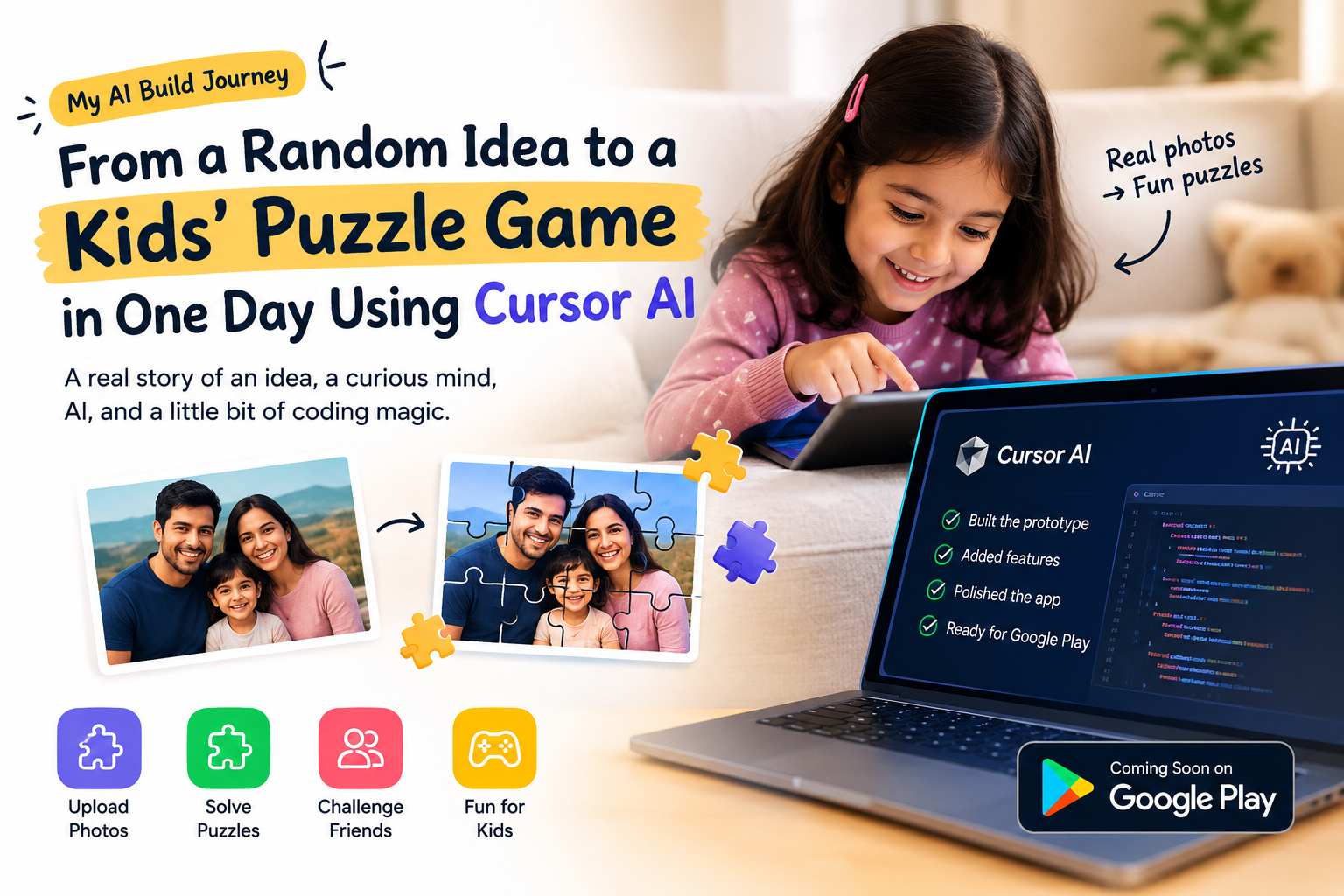
It started with a simple moment watching YouTube Kids with my niece. One idea, one laptop, and Cursor AI later, I had a working prototype of a kids' puzzle game. Here's what I learned about AI-powered development, creativity, and building apps outside your comfort zone
Hey again! I have a story for you.
Last Sunday, October 18, 2026, I was watching TV with my niece. She was watching her favorite YouTube Kids show, and I was watching along just for fun.
Suddenly, an idea hit me.
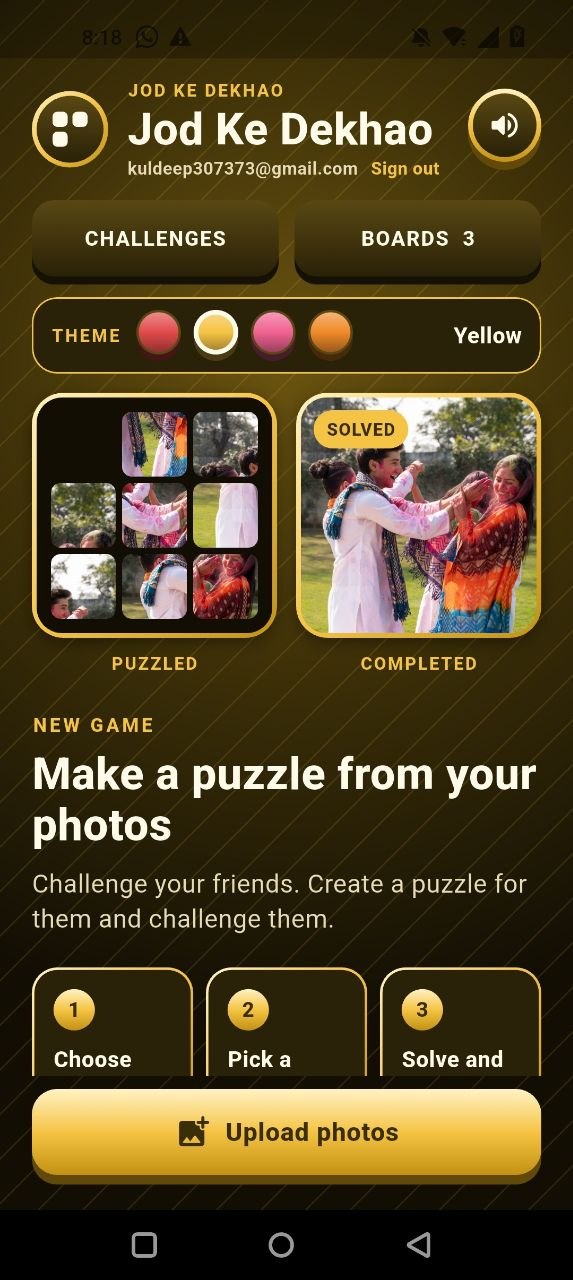
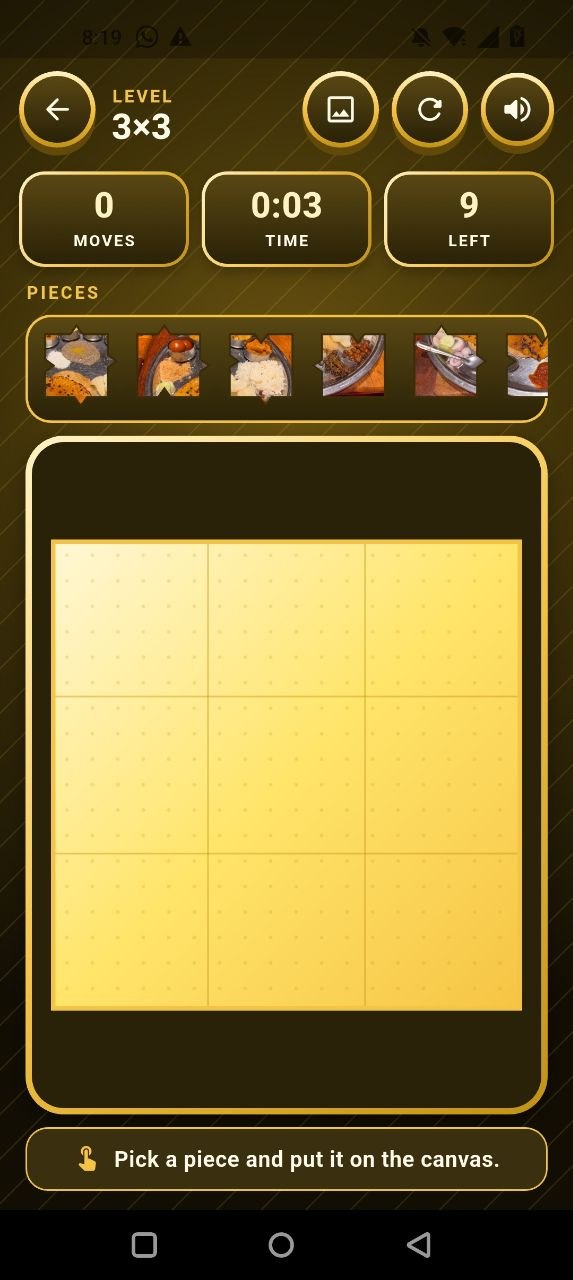
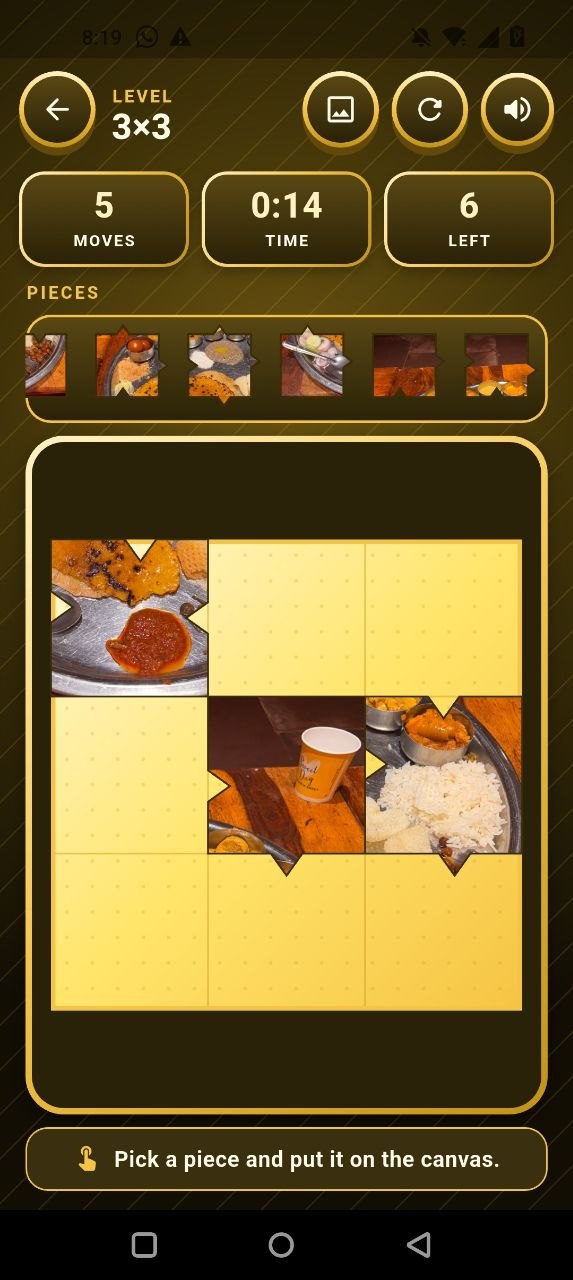
What if I built a game for kids where parents could upload photos, and the app would turn those photos into puzzles that their kids could solve?
Think about it. The pictures could be family photos. Kids could solve puzzles featuring their parents, grandparents, siblings, or even their favorite memories. It could make the game more personal, fun, and engaging.
Wooo! What an idea! I'm a genius. This is a billion-dollar idea!
Hmm... maybe a million-dollar idea. 😄
With that thought in mind, I picked up my laptop and opened my favorite AI coding tool.
Yes, Cursor.
I explained my idea to Cursor and described what I wanted to build.
And then it started working.
Within a short time, it had generated a working prototype. That was cool! I explored the features, tested the app, and thought, "Wow, it actually works!"
But I didn't stop there.
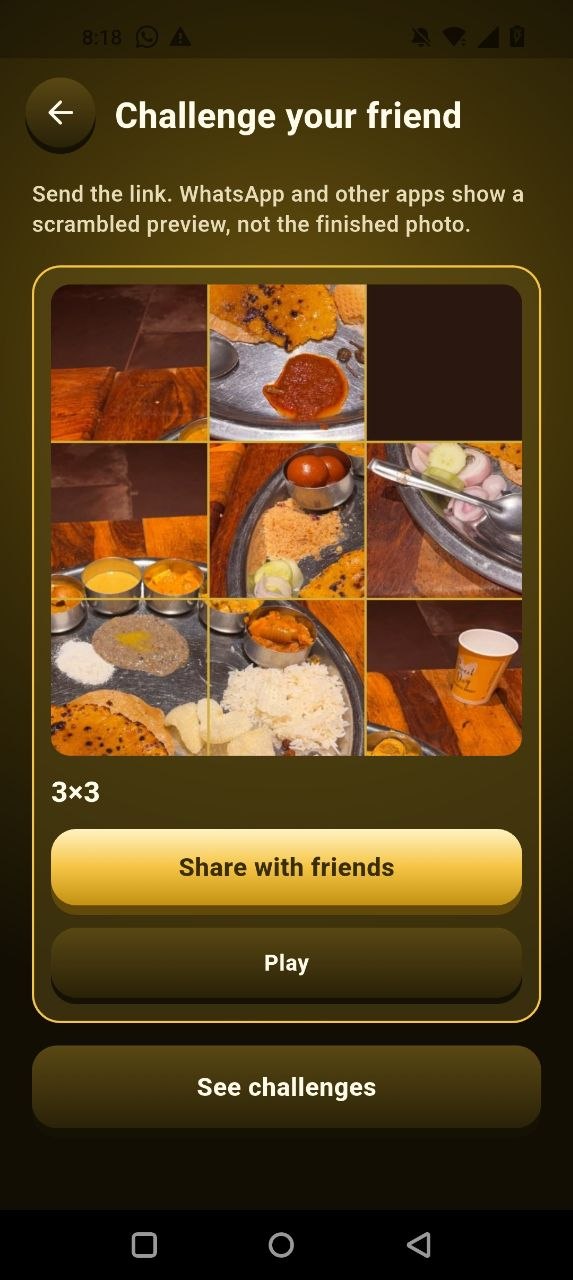
I continued improving the app with AI, polishing the experience and adding more features. We also added a feature that lets users challenge their friends to solve puzzles made from their photos.
In just one day, we had built a complete working app.
 |
 |
 |
 |
 |
Now, the game is on its way to the Google Play Store.
This Is the Power of AI
This experience reminded me of something important.
AI tools can be incredibly powerful when you know how to use them properly. Otherwise, they can consume your tokens, generate code that doesn't meet your expectations, and leave you wondering why the results aren't what you wanted.
The difference isn't just the tool. It's how you use it.
While building this game, I faced a challenge: I'm not an Android, Flutter, or Dart developer. I had to learn and solve problems in areas where I didn't have much experience.
There were issues along the way, but with AI's help, I was able to work through them and move forward.
And that's what makes this experience exciting.
You don't necessarily need to be an expert in every technology to start building something new. AI can help you explore unfamiliar technologies, understand problems, and turn your ideas into working prototypes.
Of course, that doesn't mean everything is easy or that AI can do everything perfectly.
AI Won't Make Your Decisions for You
While developing the game, I realized there were many things AI could suggest, but I still had to figure out what actually worked for my app.
For example:
Game layout: How should the puzzle pieces be arranged? How should players interact with them?
Colors and design: What would look attractive to kids without making the interface confusing?
Sounds and animations: What feedback should players get when they move a piece or complete a puzzle?
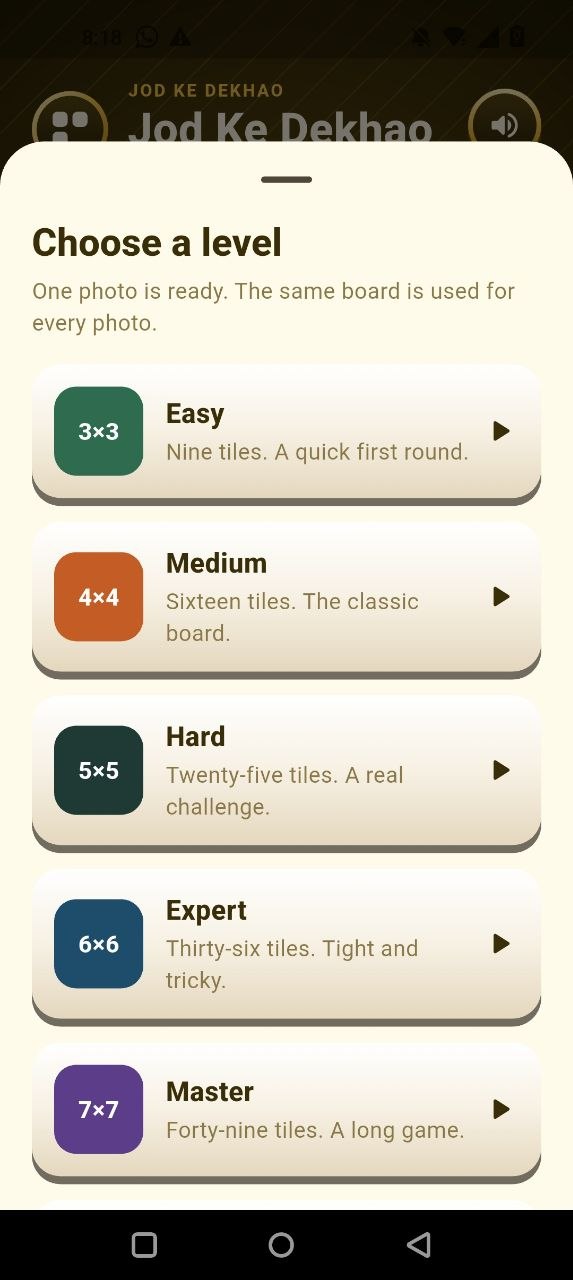
Hints and difficulty: How can we help younger kids solve puzzles without making the game too easy?
User experience: How can we make the game simple enough for children while giving parents the controls they need?
AI can generate suggestions and code for these things. But someone still needs to decide which ideas make sense, test them, and improve the experience.
That's where your own thinking, creativity, and judgment come in.
You have to add your own flavor to the product you're building with AI.
Don't just accept whatever AI generates. Experiment with it. Test it. Question it. Improve it.
Because building an app isn't just about writing code. It's about creating something that people actually enjoy using.
The Real Opportunity
I believe AI is going to change software development in two major ways.
First, it will automate many tasks that developers used to do manually. Second, it will help developers become much more productive and enable them to build things they might not have attempted before.
Will AI replace developers? It may replace some tasks and change many jobs, but I believe people who know how to use AI effectively will have new opportunities to build and experiment faster.
For me, this little experiment started with a random thought while watching a kids' show with my niece.
One idea led to a prototype, the prototype became a game, and now we're preparing to launch it.
And who knows? Maybe kids will love playing with their family photos.
For now, I'm excited to see what happens when the game reaches real users.
Have you ever had a random idea and used AI to turn it into something real? I'd love to hear your story.